Pluralist Society - Migration to the Netherlands
19 important questions on Pluralist Society - Migration to the Netherlands
What contributes to cultural diversity in the Netherlands?
- People from around the world move to the Netherlands.
- They bring their own customs and traditions.
- This results in cultural diversity within the country.
What are the main categories for motives of migration to the Netherlands?
- Economic reasons: Lack of work or poverty.
- Political reasons: Political instability, conflict, persecution.
- Social reasons: Joining relatives or partners abroad.
Why is migration considered a significant decision?
- Migration is a major change from familiar surroundings.
- Involves adaptation to a new country.
- Migrants face challenges with language, people, and culture.
- Higher grades + faster learning
- Never study anything twice
- 100% sure, 100% understanding


For my 1st exam I got a C. Then, I started looking for ways to learn better and I came across Study Smart. Since then I have scored a A+, A, A- and another A. I highly recommend it to everyone who wants to hear it. I am so happy with it!!

I was struggling to finish all my first-year subjects for 3 years. Then I discovered Study Smart, which helped me to finish all of them within 3 months.

Because of StudySmart, things are going well in many ways. Before, I always had study stress and no time for anything. Now I feel calm and confident (because of the program). I used to score a B, now I usually score an A or A+.

Hey Chris, I really want to thank you very much for developing the platform, I usually got around C for my exams, now I scored an A+, an A and a A- !!

Since using Study Smart, my average has increased significantly. I even completed a statistics course with a A+ while I'm bad at statistics. I took on extra courses this year, because of Study Smart. Thanks so much!

Ever since I started studying with StudySmart I passed all my exams !!! No more re-sits!! At first, I was happy with a pass and now I only get good grades. Many thanks!

I aced all the courses I studied with Study Smart. For law, I first scored a D, and now an A! I’m 100% sure that I’ll pass all the courses I study with Study Smart.

I always thought I studied well. My grades were fine. I could never have imagined that applying these study skills would have such a huge and direct impact on my grades, my speed and the pleasure I have in learning.

For the first time, I finally feel totally confident about the way I learn. I have the perfect overview and make great progress in terms of speed and the grades I get. Thanks, Chris!

I immediately started to enjoy learning again, and my grades soared. All of a sudden, everything went better. I highly recommend Study Smart to all students..

Being able to create my materials online made the process of studying so much smoother and quicker. I no longer have to spend a huge amount of my time on creating my summaries.

At first, my notes were a mess. Now I use Study Smart to take my notes in a perfectly structured way. It helps me to save a lot of time and do other things I enjoy.

Students that study with Study Smart get better grades. The system applies all the learning methods in such a way that both well-performing students and students who struggle perform much better.

Hi Chris, I would like to thank you very much. Last year I scored C on a course, and this year I got an A+ thanks to your method! Thank you very much!

The largest effect is that my child is more enthusiastic about school! Every parent wants their children to be happy at school, Study Smart made it happen.

In high school, I failed several exams, and that has really changed now. I actually needed this tool very much back then. Since I started studying with StudySmart, I haven't had any D's. My average score is now an A and those are results I would have never had in the past

With my old method, I passed only 3 out of 8 courses. Since I started taking my notes digitally in Study Smart, I have passed all my courses on the first try. For me, StudySmart takes away the stress of wondering if I will pass or not.

Thanks to StudySmart, I passed all my exams, and with better grades than before! On top of that, I have mastered a very good study method now, which I am confident will help me earn my degree.
What were the reasons people migrated from former colonies to the Netherlands post-World War II?
- Netherlands had colonies like Dutch East Indies, Surinam, and Antilles.
- Post-independence, former residents moved to the Netherlands.
- Main reasons: better future, work, and study opportunities.
Who were the guest workers, and why did they come to the Netherlands?
- Originated from Turkey and Morocco mainly.
- Dutch economy's growth in the 1960s required low-skilled workers.
- Invited by companies and government.
- Expected to return home, many stayed.
Which countries did early guest workers in the Netherlands come from and what was their fate?
- Initially from Italy, Spain, and Greece.
- Returned to their countries when conditions improved.
- Many workers from Morocco and Turkey, however, stayed permanently.
How does the Netherlands decide which migrants can stay?
- Decisions are influenced by international treaties.
- The Dutch government follows a restrictive immigration policy.
- The Netherlands sets strict requirements for migrants.
- Main groups of migrants have specific rules.
What is the current situation of refugees mentioned in the text?
- There are about 80 million refugees.
- Refugees are defined as people who leave their homes to flee war and violence.
What do many refugees seek when fleeing to the West, and what affects asylum application numbers?
- Asylum: Refuge, protection, shelter.
- Application Fluctuations: Depend on instability, conflict level.
- 1990s Refugees: From Sri Lanka, Somalia, Yugoslavia due to civil wars.
- Recent Influx: Due to Syria war, Taliban in Afghanistan.
What commitments did the Netherlands make by signing the UN Refugee Convention in 1951?
- Assistance/Shelter: Offer to refugees.
- Asylum Application: Thorough investigation.
- Proof Required: Danger in home country due to war, intolerance.
- Identification Needed: Valid documents necessary.
What is the policy for migrant workers within the European Union?
- Free Travel: Across EU member states.
- Inhabitants: EU members benefit from this mobility.
- European Union: Facilitates easy movement for work.
What allows migrant workers from EU member states to work in the Netherlands?
- The Schengen Agreement (1985) facilitates this movement.
- Many workers come from Poland, Bulgaria, and Romania.
- They provide labor in horticulture, construction, and transport.
- Companies prefer them for accepting lower wages.
Who are knowledge migrants and what opportunities do they have in the Netherlands?
- Knowledge migrants come from the USA, Japan, China, South Korea, and India.
- They work in science and technology fields.
- Employers include universities and companies like Shell, Samsung, and Philips.
- They can usually obtain a residence permit.
What is chain migration and how is it regulated in the Netherlands?
- Chain migration involves family reunification and family formation.
- Recognized by the European Convention on Human Rights (1950).
- The Netherlands has set conditions for this type of migration.
What are the requirements to bring a family member from outside the EU to the Netherlands?
- Have a valid residence permit.
- Earn at least 130% of the minimum wage.
- Be at least 21 years old.
- Partner must pass the basic civil integration examination.
Who is not allowed to stay in the Netherlands and why?
- Economic refugees: Poverty isn't a ground for residence.
- Undocumented migrants: No legal permission to live or work.
- They hide to avoid detection.
- Estimates: Tens of thousands undocumented in the Netherlands.
What are the main concerns in the Dutch policy debate regarding immigration?
- Balancing obligations between caring for Dutch citizens and refugees.
- Concern for potential loss of housing, work, and social benefits for Dutch citizens.
- Immigration perceived as a threat to national culture and identity.
- Opinions vary on how open Dutch borders should be.
What are the migration backgrounds of people living in the Netherlands according to Statistics Netherlands (CBS) 2019?
- 75% have a Dutch background.
- 6% have a Western, first-generation migration background.
- 5% have a Western, second-generation migration background.
- 8% have a non-Western, first-generation migration background.
- 6% have a non-Western, second-generation migration background.
What are the origins of people with a migration background in the Netherlands?
- 51% Europe (except the Netherlands)
- 19% Asia
- 11% North and South America
- 10% The Netherlands* (Dutch citizens returning)
- 8% Africa
- 1% Oceania (Australia, New Zealand, Pacific Islands)
The question on the page originate from the summary of the following study material:
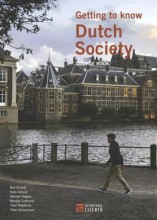
- A unique study and practice tool
- Never study anything twice again
- Get the grades you hope for
- 100% sure, 100% understanding