The Supreme Law of the Land - WHAT POWERS DO THE STATES HAVE UNDER CONSTITUTIONAL LAW?
20 important questions on The Supreme Law of the Land - WHAT POWERS DO THE STATES HAVE UNDER CONSTITUTIONAL LAW?
How does the creation of a national government relate to state authority in the constitutional scheme?
- National government has enumerated powers
- States have general authority
- Courts define operational areas for both
What is the basic principle of federalism in the U.S. constitutional system?
- Power sharing between state and national governments
- National government has limited, enumerated powers
- States have broad general police powers
How does the Tenth Amendment influence state powers?
- Powers not given to the federal government are reserved for the states
- It asserts the authority of states beyond the national government's authority
- States maintain a general authority to legislate
- Higher grades + faster learning
- Never study anything twice
- 100% sure, 100% understanding


For my 1st exam, I got a C. Then, I started looking for ways to learn better, and I came across Study Smart. Since then, I have scored an A+, A, A-, and another A. I highly recommend it to everyone who wants to hear it. I am so happy with it!!

I was struggling to finish all my first-year subjects for three years. Then I discovered Study Smart, which helped me to complete all of them within three months.

Because of StudySmart, things are going well in many ways. Before, I always had study stress and no time for anything. Now I feel calm and confident (because of the program). I used to score a B, and now I usually score an A or A+.

Hey Chris, I really want to thank you very much for developing the platform, I usually got around C for my exams, now I scored an A+, an A and a A- !!

Since using Study Smart, my average has increased significantly. I even completed a statistics course with an A+ while I'm bad at statistics. I took on extra classes this year because of Study Smart. Thanks so much!

Ever since I started studying with StudySmart, I have passed all my exams! No more re-sits! At first, I was happy with a pass, and now I only get good grades. Many thanks!

I aced all the courses I studied with Study Smart. For law, I first scored a D, and now an A! I’m 100% sure that I’ll pass all the courses I study with Study Smart.

I always thought I studied well. My grades were fine. I could never have imagined that applying these study skills would have such a huge and direct impact on each stage, my speed, and the pleasure I have in learning.

For the first time, I finally feel confident about the way I learn. I have the perfect overview and have made significant progress in terms of speed and the grades I get. Thanks, Chris!

I immediately started to enjoy learning again, and my grades soared. All of a sudden, everything went better. I highly recommend Study Smart to all students..

Being able to create my materials online made the process of studying so much smoother and quicker. I no longer have to spend a considerable amount of my time developing my summaries.

At first, my notes were a mess. Now I use Study Smart to take my notes in a perfectly structured way. It helps me to save a lot of time and do other things I enjoy.

Students that study with Study Smart get better grades. The system applies all the learning methods so that both well-performing students and students who struggle perform much better.

Hi Chris, I would like to thank you very much. Last year I scored C on a course, and this year I got an A+ thanks to your method! Thank you very much!

The most considerable effect is that my child is more enthusiastic about school! Every parent wants their children to be happy at school. Study Smart made it happen.

In high school, I failed several exams, and that has really changed now. I actually needed this tool very much back then. Since I started studying with StudySmart, I haven't had any Ds. My average score is now an A, and those are results I would have never had in the past.

With my old method, I passed only 3 out of 8 courses. However, since I started taking my notes digitally in Study Smart, I have passed all my lessons on the first try. For me, StudySmart takes away the stress of wondering if I will give or not.

Thanks to StudySmart, I passed all my exams and with better grades than before! On top of that, I have mastered a perfect study method now, which I am confident will help me earn my degree.
What is dual sovereignty and how did it affect federal authority historically?
- Separate spheres of authority for national and state governments
- The Supreme Court historically limited federal power
- Often invalidated federal laws infringing on state jurisdiction
How has the concept of preemption changed the allocation of authority between federal and state governments?
- Federal law can override state law when conflicting
- States are barred from legislating in areas of federal jurisdiction
- Shifts focus to balancing local and national interests
What role does the Supreme Court play in determining the extent of preemption?
- Assessing Congress’s intent to preempt state law
- Distinguishing between actual and potential conflicts
- Considering federalism and national uniformity in laws
How does the dormant power doctrine impact state legislation?
- States may not legislate where federal power exists but is unexercised
- Early debates focused on the weakness of state laws under the Articles of Confederation
- Conflicts with interstate commerce may limit state authority
In what ways can Congress influence state behavior indirectly through financial mechanisms?
- Establishing federal spending programs
- Withholding funds to enforce compliance with national standards
- The Supreme Court permits this under stated spending power
What limits did NFIB v. Sebelius place on congressional spending conditions?
- Some spending conditions may be coercive
- Threat of fund withdrawal could undermine state discretion
- Constitutional limitations on encouraging vs. coercing participation
What does the Constitution say about state authority?
- Few powers are explicitly granted to states.
- Limited restrictions placed on federal authority.
- Supreme Court struggles to define operational areas for both levels of government.
What is the basic postulate of the U.S. constitutional system regarding governmental power?
- Governmental power is shared between state and national governments.
- The federal government has enumerated powers.
- States maintain general police power.
How does the Tenth Amendment affect state power compared to the federal government?
- State authority exceeds that of the national government.
- Powers not delegated to the U.S. or prohibited to the states are reserved for states or the people.
What role has the Supreme Court played in defining federal and state authority historically?
- Limited federal authority in favor of state power.
- Invalidated congressional enactments when overreaching.
- Supported the concept of dual sovereignty.
How has the concept of dual sovereignty changed over time?
- A decline in distinguishing between spheres of sovereignty.
- A greater acceptance of federal authority post-New Deal.
- Applicability of the doctrine of preemption.
What is the significance of the doctrine of preemption?
- Federal law can override state law that conflicts with it.
- It applies even in the absence of an explicit conflict.
- Courts analyze Congress's intent in preemption cases.
How does Congress use its spending power to influence state actions?
- Establish federal programs, condition funding on compliance.
- Influence state law indirectly instead of directly commanding states.
- Examples include the minimum drinking age and highway funds.
What was the outcome of the NFIB v. Sebelius (2013) case regarding Congress's power?
- Indiana's Medicaid expansion was unconstitutional.
- It viewed the federal government's coercion of states as improper.
- Threat of fund cuts was seen as undue pressure.
How does the supremacy clause relate to federal and state law?
- Federal constitution and laws as supreme.
- State laws must adhere to federal law when in conflict.
- Limits state authority in areas of federal legislation.
What is the nature of the police power held by states?
- Governments to act in the usual ways.
- Some areas of legislation that federal government cannot direct.
- Courts have limited law on state authority compared to federal.
How did the Supreme Court balance local interests against interstate commerce?
- Local legislation may be upheld if it serves legitimate state interests.
- Laws must not unduly burden or discriminate against interstate commerce.
- Cases like South Carolina State Highway Dept. v. Barnwell Bros. illustrate this.
The question on the page originate from the summary of the following study material:
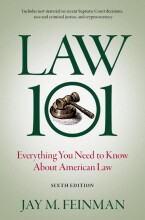
- A unique study and practice tool
- Never study anything twice again
- Get the grades you hope for
- 100% sure, 100% understanding