Designing Organizational Structure: Authority and Control
15 important questions on Designing Organizational Structure: Authority and Control
What is a flat organisation?
What are some of the problems that tall organisations may experience?
Communication, motivation and cost problems.
Communication: Communication takes longer when the chain of command longer is. Decision making gets slower
Distortion: A message has a different meaning by the time it reaches the top as people interpret messages to their own needs and interests.
Deliberately manipulation of information: Managers may manipulate information to their own interests.
Motivation: The taller the organisation gets the worse the motivation gets - less responsibility lays with each manager.
Bureaucratic costs: Managers cost a lot of money.
What is the "principle of minimum chain of command"?
- Higher grades + faster learning
- Never study anything twice
- 100% sure, 100% understanding


For my 1st exam I got a C. Then, I started looking for ways to learn better and I came across Study Smart. Since then I have scored a A+, A, A- and another A. I highly recommend it to everyone who wants to hear it. I am so happy with it!!

I was struggling to finish all my first-year subjects for 3 years. Then I discovered Study Smart, which helped me to finish all of them within 3 months.

Because of StudySmart, things are going well in many ways. Before, I always had study stress and no time for anything. Now I feel calm and confident (because of the program). I used to score a B, now I usually score an A or A+.

Hey Chris, I really want to thank you very much for developing the platform, I usually got around C for my exams, now I scored an A+, an A and a A- !!

Since using Study Smart, my average has increased significantly. I even completed a statistics course with a A+ while I'm bad at statistics. I took on extra courses this year, because of Study Smart. Thanks so much!

Ever since I started studying with StudySmart I passed all my exams !!! No more re-sits!! At first, I was happy with a pass and now I only get good grades. Many thanks!

I aced all the courses I studied with Study Smart. For law, I first scored a D, and now an A! I’m 100% sure that I’ll pass all the courses I study with Study Smart.

I always thought I studied well. My grades were fine. I could never have imagined that applying these study skills would have such a huge and direct impact on my grades, my speed and the pleasure I have in learning.

For the first time, I finally feel totally confident about the way I learn. I have the perfect overview and make great progress in terms of speed and the grades I get. Thanks, Chris!

I immediately started to enjoy learning again, and my grades soared. All of a sudden, everything went better. I highly recommend Study Smart to all students..

Being able to create my materials online made the process of studying so much smoother and quicker. I no longer have to spend a huge amount of my time on creating my summaries.

At first, my notes were a mess. Now I use Study Smart to take my notes in a perfectly structured way. It helps me to save a lot of time and do other things I enjoy.

Students that study with Study Smart get better grades. The system applies all the learning methods in such a way that both well-performing students and students who struggle perform much better.

Hi Chris, I would like to thank you very much. Last year I scored C on a course, and this year I got an A+ thanks to your method! Thank you very much!

The largest effect is that my child is more enthusiastic about school! Every parent wants their children to be happy at school, Study Smart made it happen.

In high school, I failed several exams, and that has really changed now. I actually needed this tool very much back then. Since I started studying with StudySmart, I haven't had any D's. My average score is now an A and those are results I would have never had in the past

With my old method, I passed only 3 out of 8 courses. Since I started taking my notes digitally in Study Smart, I have passed all my courses on the first try. For me, StudySmart takes away the stress of wondering if I will pass or not.

Thanks to StudySmart, I passed all my exams, and with better grades than before! On top of that, I have mastered a very good study method now, which I am confident will help me earn my degree.
What is meant with span of control? What is the advantage of this?
The number of employees can increase while the number of managers remains the same -> Saves the company costs for managers.
What is the advantage of decentralising authority in tall organisations?
How do you call a form of organizational structure in which people can be held accountable for their actions because they are required to act in accordance with rules and standard operating procedures?
How do you call the authority a person possesses because of his or her position in an organization?
What are the advantages and disadvantages of bureaucracy?
- Organisational levels are clearly defined
- No questions about each person's role in the organisation
- Individuals are held accountable for their actions
- Separates the position from the person
Disadvantages:
- Bureaucratic organisations often become tall, centralised and inflexible.
- Decision making slows down
- Members often rely too much on rules and rely on managers to make decisions
How do you call the state of opposition that occurs when two or more people have different views of what another person should do and, as a result, make conflicting demands on the person?
What is management by objectives?
How do you call the uncertainty that occurs for a person whose tasks or authority are not clearly defined?
How do you call the process of giving employees throughout an organization the authority to make important decisions and to be responsible for their outcomes?
How do you call work groups consisting of people who are jointly responsible for ensuring that the team accomplishes its goals and who are empowered to lead themselves?
How do you call formal work groups of employees from across an organization's different functions that are empowered to direct and coordinate the value-creation activities necessary to complete different programs or projects?
How do you call workers who are employed for temporary periods by an organization and who receive no indirect benefits such as health insurance or pensions?
The question on the page originate from the summary of the following study material:
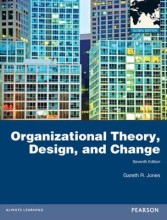
- A unique study and practice tool
- Never study anything twice again
- Get the grades you hope for
- 100% sure, 100% understanding